YouTube Optimisation vs Channel Management: What's the Difference?

What's the Difference Between YouTube Optimisation and Channel Management?
They sound similar. They're not.
YouTube video optimisation is about making individual videos perform better. Channel management is about making your entire channel work as a coherent, growing operation. One is tactical, the other is strategic. Most channels eventually need both, but understanding the difference helps you figure out where to start and stops you from overpaying for something you don't need yet.
What Is YouTube Video Optimisation?
Video optimisation is the hands-on work that happens at the individual video level. Every video you upload is competing for attention against the millions of other videos published to YouTube every single day, and optimisation is what determines whether yours gets found or buried.
Here's what it actually involves.
Titles are your first impression. A good title includes your target keyword, stays under 60 characters, and makes someone want to click. It sounds easy until you're trying to do it for 50 videos a week while keeping each one unique and accurate.
Descriptions are where most channels leave performance on the table. YouTube reads your description to understand what your video is about. The first two lines matter most because they show in search results and need to include your target keywords. After that, you've got space for timestamps, CTAs, links, and supporting context. Most channels either leave descriptions blank or copy-paste the same template every time. Both are mistakes.
Tags help YouTube categorise your video. Five to eight relevant tags is the sweet spot. More than that and you're diluting the signal. Fewer, and you're not giving the algorithm enough to work with.
Thumbnails arguably matter more than anything else on this list. 90% of the best-performing videos on YouTube use custom thumbnails. Your thumbnail is the thing that makes someone stop scrolling and click.
Then there's captions, cards, and end screens. Captions improve accessibility and give YouTube more text to index. Cards and end screens keep viewers on your channel longer, which the algorithm rewards.
That's video optimisation. Specific, repeatable, and the single fastest way to improve an underperforming channel without changing anything about your actual content.
What Is YouTube Channel Management?
If video optimisation is about making each upload work harder, channel management is about making sure the whole operation is heading somewhere.
Think of it like this: optimisation is tuning individual instruments. Channel management is conducting the orchestra.
It covers the strategic and operational layer across your entire channel. That starts with publishing operations. Making sure videos actually go live on time, every time. Scheduling, uploading, QA-ing, coordinating across time zones if you're publishing internationally. For channels doing serious volume, this alone is a full-time job.
On top of that sits the content calendar. Planning what goes out and when, based on performance data, trending topics, competitive gaps, seasonal patterns. Not just a spreadsheet of dates. A strategic roadmap that evolves as you learn what works.
Reporting needs to be useful. Regular, actionable, answering "what's working, what isn't, and what should we change?" Not vanity metrics. Not a monthly PDF you skim and forget. Data you can actually make decisions from.
The strategic layer is what separates real management from just "uploading for you." Someone with deep YouTube expertise keeping an eye on algorithm changes, competitor activity, new formats like Shorts, monetisation opportunities you might be missing. This is the thinking work that turns a collection of uploads into a channel with direction.
And project management holds it together. One point of contact. Clear accountability. Proper timelines. You shouldn't have to chase your agency for updates. That's their job.
Which One Do I Actually Need?
This is the real question, and the honest answer is it depends on where you are.
If you're already managing your channel operations fine, you've got a publishing schedule, you know your content strategy, you're handling the logistics, but your videos just aren't performing as well as the content deserves? That's a video optimisation problem. Your titles might be weak, your thumbnails generic, your descriptions copy-paste jobs. Per-video optimisation is the fastest, most cost-effective fix. You keep control of your channel. We make sure every upload is packaged to perform.
If the whole operation feels like it's held together with sellotape, that's different. Publishing is inconsistent. There's no real strategy beyond "upload when we can." Nobody's looking at the analytics properly. You're spending more time on logistics than on creating content. That's when channel management makes sense. It takes the operational burden off your plate and adds strategic direction on top.
And if you're publishing at volume, think 50+ videos a month, you probably need both. The strategic oversight and the per-video execution to keep quality consistent across everything. This is where most of our larger clients end up. The management subscription handles strategy and operations. Credits handle the video-level work.
Can I Start With One and Add the Other Later?
This is actually what we'd recommend for most new clients.
If you're not sure where to start, video optimisation is the lower commitment option. Pick a batch of videos, get them optimised, see the impact. If the results make the case for broader support, you can add channel management later without rewriting any contracts.
Our credit system is built for exactly this kind of flexibility. You're not locked into a package that bundles things you don't need. You use what you use, and you scale when it makes sense.
Some clients stay on optimisation-only permanently. They've got their channel operations sorted internally and just need the metadata done properly at scale. Others start with optimisation and within a few months realise they want someone managing the whole show. Both paths work.
A Quick Pricing Comparison
To make this concrete.
Whether you're an independent creator or a global enterprise, our flexible credit pack sizes are designed to scale with you — from lightweight optimisation runs to full distribution programmes, there's a package built for every level of ambition.
Put them together and you've got the full-service setup. Channel management subscription plus credits for video optimisation. Pricing depends on the number of channels and video volume, but the credit system means you're only ever paying for what you actually use.
Enterprise clients managing multiple channels across territories can access volume discounts up to 80%. The maths gets significantly better at scale.
Still Not Sure? Here's a Simple Test
Ask yourself one question. Is your problem the videos, or the channel?
If individual videos are underperforming despite good content, it's the videos. Start with optimisation.
If the whole channel feels directionless, inconsistent, or like it's stalling, it's the channel. Start with management.
If both? You already know the answer.
Either way, we're happy to talk it through. Book a free strategy call and we'll give you a straight recommendation based on your actual situation. Not a one-size-fits-all package.
If you liked that why not take a look
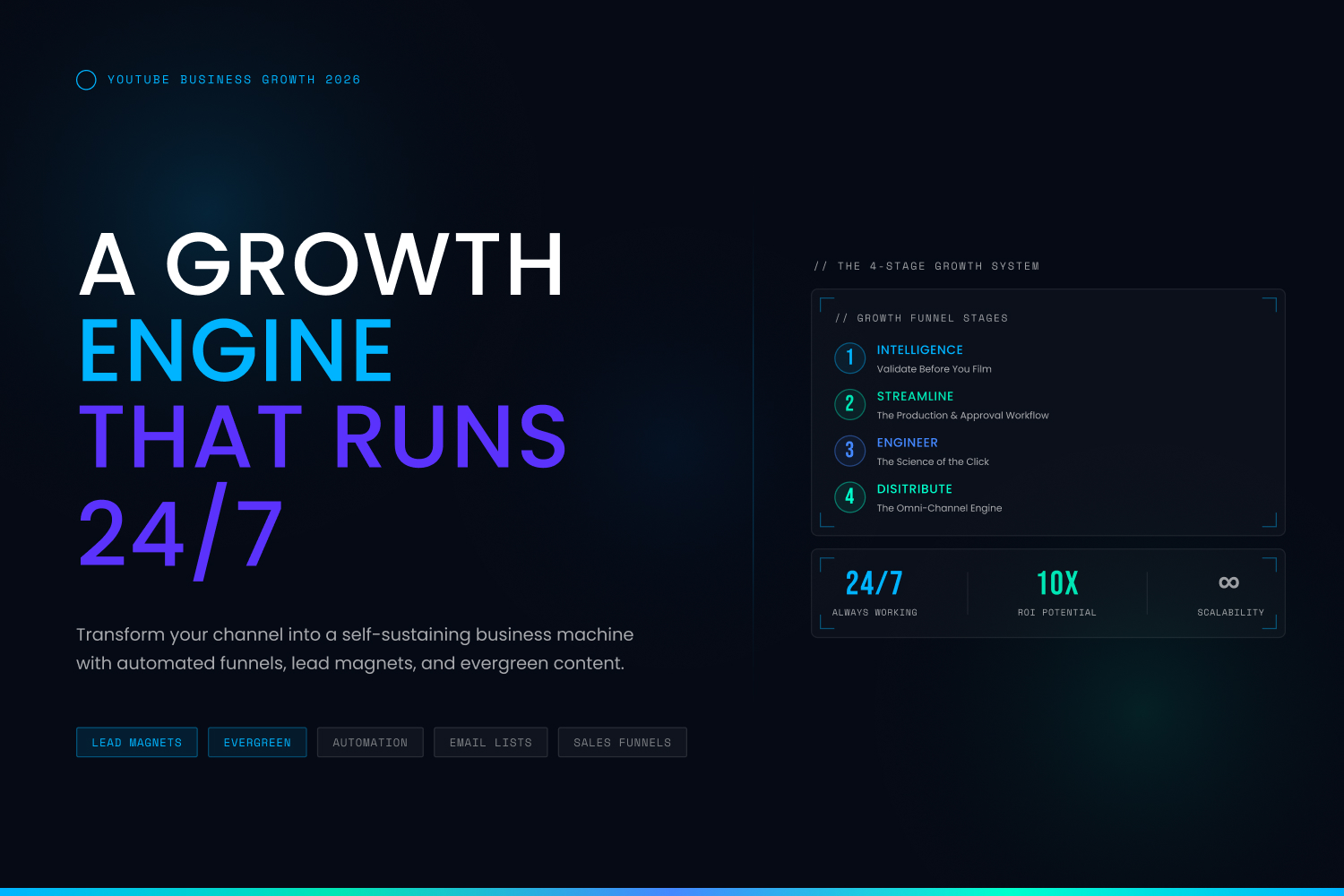
YouTube for Brands: How to Build a Business Growth Engine in 2026
Turn YouTube into a measurable growth channel for your brand. Strategy, content types, SEO, common mistakes, and how to measure ROI - everything B2B and B2C brands need to know.

How to Monetise Your YouTube Channel in 2026: Every Revenue Stream Explained
Every way to make money on YouTube in 2026. YPP requirements, ad revenue benchmarks by niche, sponsorship rates, memberships, affiliates, and products with real numbers.

How Often Should You Post on YouTube? (What 5 Million Channels Tell Us)
Data from 5 million YouTube channels reveals the truth about posting frequency. How often to upload long-form and Shorts, whether daily posting works, and the consistency threshold that matters most.

How to Write YouTube Titles That Get Clicks (And Actually Rank)
Write YouTube titles that drive CTR and rank in search. 8 proven title formulas, power words that trigger clicks, the Title Flip strategy, and real examples from 2026.

YouTube Analytics: The Metrics That Actually Matter in 2026
Cut through the noise in YouTube Studio. These are the 7 analytics metrics that drive real channel growth in 2026, with benchmarks, where to find them, and how to act on them.

Why YouTube Thumbnails Matter More Than You Think
YouTube thumbnails are the single biggest lever for views. Learn why CTR depends on thumbnails, what makes them work, and how to test and improve yours in 2026.

Ready to maximise your YouTube revenue?
Get in touch and let’s begin exploring your channel’s hidden potential.